Making expertise legible without flattening it.
Most experts don’t have a knowledge problem.
They have a proximity problem.
You’re too close to what you know.
You’ve lived inside the nuance. The edge cases. The exceptions to the rule. Your brain automatically fills in gaps other people don’t even know exist yet. So when you try to explain something, it comes out… dense. Or abstract. Or weirdly over-detailed in the wrong places.
And then you wonder why clients look overwhelmed instead of impressed.
Here’s the thing nobody tells you early enough:
Client-ready content isn’t about saying more. It’s about saying the right thing at the right moment.
Expert content starts with depth.
Client-ready content starts with orientation.
Before someone can appreciate your insight, they need to know where they are, what problem they’re solving, and why your expertise matters to them — not in theory, but right now.
Most experts skip that step because it feels obvious.
It isn’t.
When content fails with clients, it’s usually not because it’s wrong. It’s because it asks the reader to climb too fast. Too many concepts at once. Too much context assumed. Too little grounding in the decision they’re actually trying to make.
Translation is the skill here.
Not simplification.
Not dilution.
Translation.
It means you decide what not to say yet.
It means you trade precision for clarity — temporarily — so the reader can keep up.
It means you lead with the consequence, not the theory.
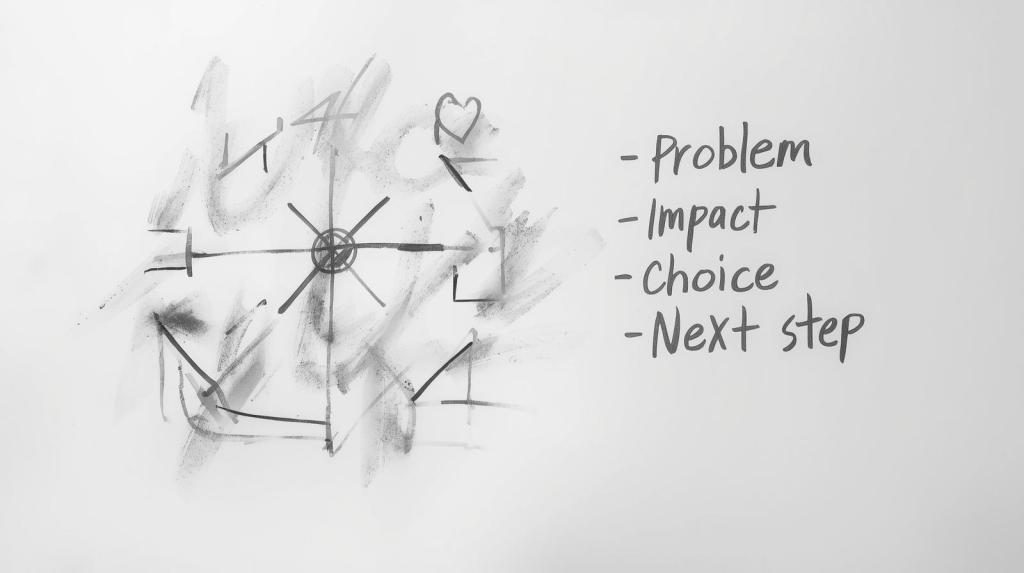
Client-ready content answers questions in the order people actually ask them in their heads:
What is this?
Why should I care?
How does this affect my situation?
What do I do next?
Only after that do they want the nuance.
Only after that do they trust the depth.
The irony is that the clearer your content becomes, the more expert you sound. Not less.
Because clarity signals confidence.
It says, “I understand this well enough to guide you through it.”
When expertise is client-ready, it doesn’t feel like a lecture. It feels like relief. Like someone finally put language to a problem the reader’s been circling for weeks.
That’s the bar.
Not “Did I include everything I know?”
But “Can someone use this without needing me in the room?”
That’s when expertise stops living in your head — and starts doing its job.




Leave a comment